Source Inductive Proximity Sensor for Automation, Corridor, and Industrial
Find 30 listings for the Inductive Proximity Sensor featuring Eddy Current principles and two-wire configurations. Buyers can compare models like the IPS Series and F&C sensors with varying detection distances and IP ratings for industrial automation and corridor applications.
Key considerations
Products List


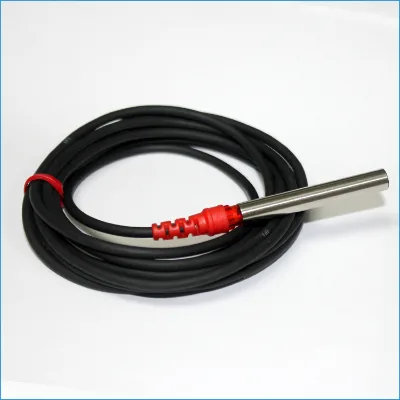
High Precision Inductive Proximity Sensor for Industrial Automation Equipment
$20.00 - $5000.00
MOQ: 1 Pieces


Comprehensive Sourcing Guide
Strategic Sourcing Guide for Inductive Proximity Sensors
Navigating the global market for inductive proximity sensors requires a disciplined approach that balances technical precision with supply chain reliability. These components are critical for non-contact detection in industrial automation, serving as the eyes of modern manufacturing lines. Buyers must move beyond generic product listings to understand the specific operational parameters, certification requirements, and manufacturing processes that define a high-quality sensor. This guide outlines the essential factors for sourcing these devices effectively, ensuring that procurement decisions are grounded in verified data rather than marketing assertions.
Technical Specifications and Operational Principles
The core functionality of an Inductive Proximity Sensor relies on the principle of electromagnetic induction. When a metallic object enters the sensing field, it generates eddy currents within the target, causing a change in the oscillation amplitude of the sensor's internal circuit. This change triggers the output signal. Understanding the specific principle is vital; for instance, some applications require diffuse reflection types, while others depend on standard inductive principles. The sensor's ability to detect targets is heavily influenced by its physical dimensions and the material of the target.
Buyers should verify the detection distance, which varies significantly based on the sensor model and the target material. Available specifications often include detection distances of 50 mm or 70 mm, with options for NPN or PNP output types. The output type determines how the sensor interfaces with the control system; NPN and PNP configurations must match the input requirements of the PLC or controller. Furthermore, the output signal type can be either switching or analog. Switching types provide a binary on/off signal, ideal for simple presence detection, while analog types offer continuous displacement measurement, suitable for precision positioning tasks.
The physical housing material is another critical specification. Sensors are commonly available with stainless steel or plastic housings. Stainless steel variants offer superior durability in harsh environments, resisting corrosion and mechanical impact, while plastic housings, often made from PBT, provide cost-effective solutions for less demanding applications. The IP rating, often associated with the material composition, indicates the level of protection against dust and water ingress. Buyers must confirm the specific IP rating for their intended environment, as "IPMaterial" designations in listings can be ambiguous and require clarification.
Compliance and Certification Verification
In the industrial sector, compliance is not merely a formality but a prerequisite for market access and operational safety. When sourcing inductive proximity sensors, buyers must rigorously verify that products meet international standards. The most common certifications observed in the market include ISO, RoHS, and CE. ISO certification indicates that the manufacturer adheres to quality management standards, ensuring consistent production processes. RoHS compliance confirms that the sensor is free from specific hazardous substances, which is essential for environmental regulations in many regions. CE marking signifies conformity with health, safety, and environmental protection standards for products sold within the European Economic Area.
However, the presence of a certification claim on a product listing does not guarantee that every unit in a batch is certified. Buyers should request valid test reports or certificates of conformity from the supplier before placing large orders. It is also important to distinguish between the certification of the final product and the manufacturing process. For example, a sensor might be produced using an injection molding process, which requires specific quality controls to ensure the housing meets dimensional tolerances. The standard production process for many sensors involves normal wirewound techniques or injection molding, depending on the internal coil construction and housing design.
Cost Drivers and Pricing Dynamics
The price of an Inductive Proximity Sensor is influenced by a complex interplay of factors, including material costs, production complexity, and order volume. The observed price range in the market can vary dramatically, from as low as $0.46 to over $44,000. This vast disparity reflects the difference between basic, single-item sensors and high-precision, custom-engineered systems. The lower end of the spectrum typically represents standard, off-the-shelf models with basic specifications, while the higher end includes specialized units with custom features, high accuracy grades, or integrated systems.
Order volume plays a significant role in determining the final unit cost. Minimum Order Quantities (MOQ) typically range from 1 to 1,000 units, with many suppliers setting an MOQ of 50 pieces for standard items. Purchasing in larger quantities often unlocks tiered pricing structures, reducing the per-unit cost. Additionally, customization is a major cost driver. Sensors that require custom dimensions, specific cable lengths, or unique output configurations will incur higher costs due to the additional engineering and setup time required. The packaging method also affects logistics costs; while bubble bags are standard for individual protection, sea or air freight options for bulk shipments add to the overall expense.
Typical Applications and Industry Fit
Inductive proximity sensors are ubiquitous in industrial automation, serving a wide array of applications where reliability and speed are paramount. One common application is in corridor monitoring systems, where sensors detect the presence of personnel or objects to trigger lighting or security measures. In this context, the sensor must be robust enough to withstand frequent activation and potentially harsh environmental conditions. Another primary application is in general automation industrial settings, where these sensors are used for part detection, position feedback, and cycle counting on assembly lines.
The specific type of sensor chosen depends on the application's requirements. For linear displacement tasks, magnetic displacement sensors with analog output signals are often preferred, offering high accuracy grades such as 0.2G. These are essential in applications requiring precise measurement of movement. In contrast, for simple on/off detection, a switching type sensor with a diffuse reflection or standard inductive principle is sufficient. The movement type, whether linear or rotational, dictates the sensor's mounting and sensing face orientation. Buyers should align the sensor's application profile with their specific operational needs, ensuring that the detection distance and output type match the machine's cycle time and control logic.
Supplier Evaluation and Manufacturing Capabilities
Selecting the right supplier is as critical as selecting the right product. Buyers should evaluate suppliers based on their manufacturing capabilities, origin, and ability to support customization. Many reputable suppliers originate from major manufacturing hubs such as Shanghai or Hunan in China, regions known for their robust electronics and automation component industries. The place of origin can influence the supply chain's resilience and the availability of skilled labor.
When evaluating a supplier, look for evidence of their production process. Suppliers utilizing injection molding for housing and normal wirewound techniques for coils demonstrate a commitment to standardized, high-volume production. The ability to offer OEM services is a strong indicator of a supplier's flexibility and capacity to meet specific client requirements. Furthermore, the supplier's lead time is a crucial factor in procurement planning. Typical lead times range from 5 to 14 days, but this can vary based on order size and customization needs. Buyers should verify the current lead time with the supplier to avoid production delays.
Quality Control and Packaging Standards
Quality control is the backbone of reliable sensor performance. Buyers must ensure that suppliers adhere to strict quality assurance protocols throughout the manufacturing process. This includes verifying the accuracy grade of the sensor, which can be as precise as 0.2G for high-end displacement models. The condition of the product upon arrival is also critical; listings often specify that products are "New" and "100% Original," but buyers should insist on inspection protocols to confirm these claims.
Packaging plays a vital role in protecting the sensors during transit. Standard packaging often includes bubble bags for individual units, while bulk shipments may utilize sea or air freight containers. The single package size and gross weight are important for logistics planning; for example, a typical single package might measure 18x10x11 cm with a gross weight of 0.500 kg. Buyers should request detailed packaging specifications to ensure that the shipping method chosen will not damage the sensitive electronic components. Additionally, verifying the manufacturer part number, such as F3C-06ks01-N, ensures that the exact model ordered is received, preventing compatibility issues.
Long-Term Procurement Considerations
Sourcing inductive proximity sensors is not a one-time transaction but a long-term partnership that requires ongoing management. Buyers should consider the availability of spare parts and the supplier's ability to support future orders. The standard nature of many sensors means that replacement parts are generally easy to source, but custom models may require specific re-tooling or engineering support. The availability of customization options, such as specific wire configurations (2 or 3 wires) or unique dimensions, can extend the lifecycle of a product line by allowing for upgrades without a complete system overhaul.
Furthermore, buyers should monitor the evolution of standards and certifications. As regulations change, suppliers must adapt their products to remain compliant. A supplier with a track record of maintaining ISO, RoHS, and CE certifications is better positioned to support long-term procurement needs. Finally, the total cost of ownership should be considered, including not just the purchase price but also the cost of installation, maintenance, and potential downtime. By focusing on high-quality, certified products from reliable suppliers, buyers can minimize risks and ensure the smooth operation of their industrial systems.
FAQs
What certifications do inductive proximity sensors typically have?
Most inductive proximity sensors carry ISO, RoHS, and CE certifications. These marks indicate compliance with quality management, hazardous substance restrictions, and European safety standards, though buyers should verify specific test reports for each batch.
Can I customize the dimensions of these sensors?
Yes, customization is available for many inductive proximity sensors. Buyers can request specific dimensions or wire configurations, but custom orders often involve higher costs and may extend the lead time compared to standard models.
What is the typical lead time for these products?
The typical lead time ranges from 5 to 14 days for standard orders. This duration can vary based on order volume, customization requirements, and the specific manufacturing capacity of the supplier in regions like Shanghai or Hunan.
Which housing materials are used for these sensors?
Sensors are commonly available with stainless steel or plastic housing materials. Stainless steel offers durability for harsh environments, while plastic housings, often made from PBT, provide cost-effective solutions for less demanding industrial applications.
What output signal types are available for these sensors?
Available output signal types include switching and analog signals. Switching types provide binary on/off detection, while analog types offer continuous displacement measurement, suitable for precision positioning tasks requiring high accuracy grades.
What is the minimum order quantity for these sensors?
Minimum order quantities typically range from 1 to 1000 units, with many suppliers setting an MOQ of 50 pieces. Larger orders often unlock tiered pricing structures, reducing the per-unit cost for bulk procurement needs.